
Gemini Tool Retrieval makes tool descriptions part of the interface
Gemini API Tool Retrieval loads parameter schemas on demand. Clear descriptions and task-level tests help teams judge whether deferred tools improve an agent.
What Google announced
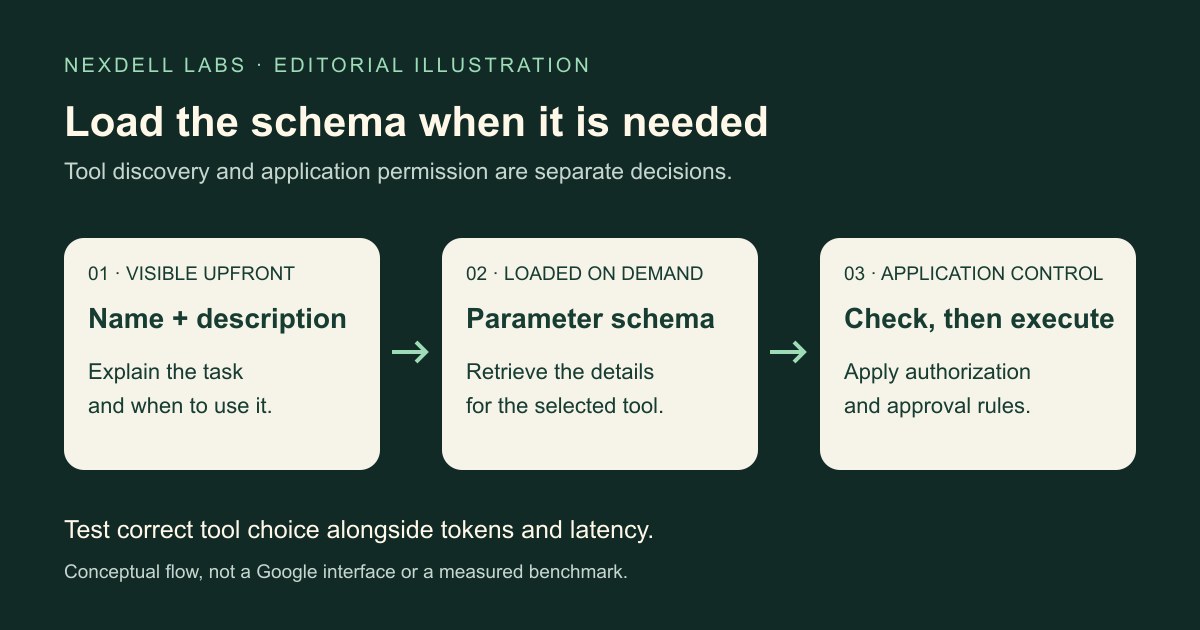
On November 19, Google launched Tool Retrieval in preview in the Gemini Interactions API. With tool_search enabled and defer_loading set on selected functions, the model sees their names and descriptions upfront, then requests full parameter schemas as needed. Google says this can reduce input tokens; savings depend on which schemas a conversation actually loads.
The description becomes a routing decision
Our analysis: deferring a schema makes the short description carry more responsibility. A support agent choosing between checking refund eligibility and issuing a refund needs descriptions that distinguish those jobs. A vague label can send it toward the wrong function before it sees the parameters. Loading a schema also should not grant permission to execute it: application authorization and approval rules still need to govern the action.
Test the choice, then the savings
Replay representative tasks against the same tool library with schemas loaded upfront and deferred. Include similar function names, ambiguous requests, and actions the user cannot authorize. Compare correct tool selection, completed tasks, input tokens, and end-to-end latency. Inspect retrieval traces when the agent takes a wrong turn. Keep frequently needed tools loaded if that works better for the workload. Can the agent reliably distinguish an eligibility check from an irreversible action before a smaller prompt is counted as a win?